
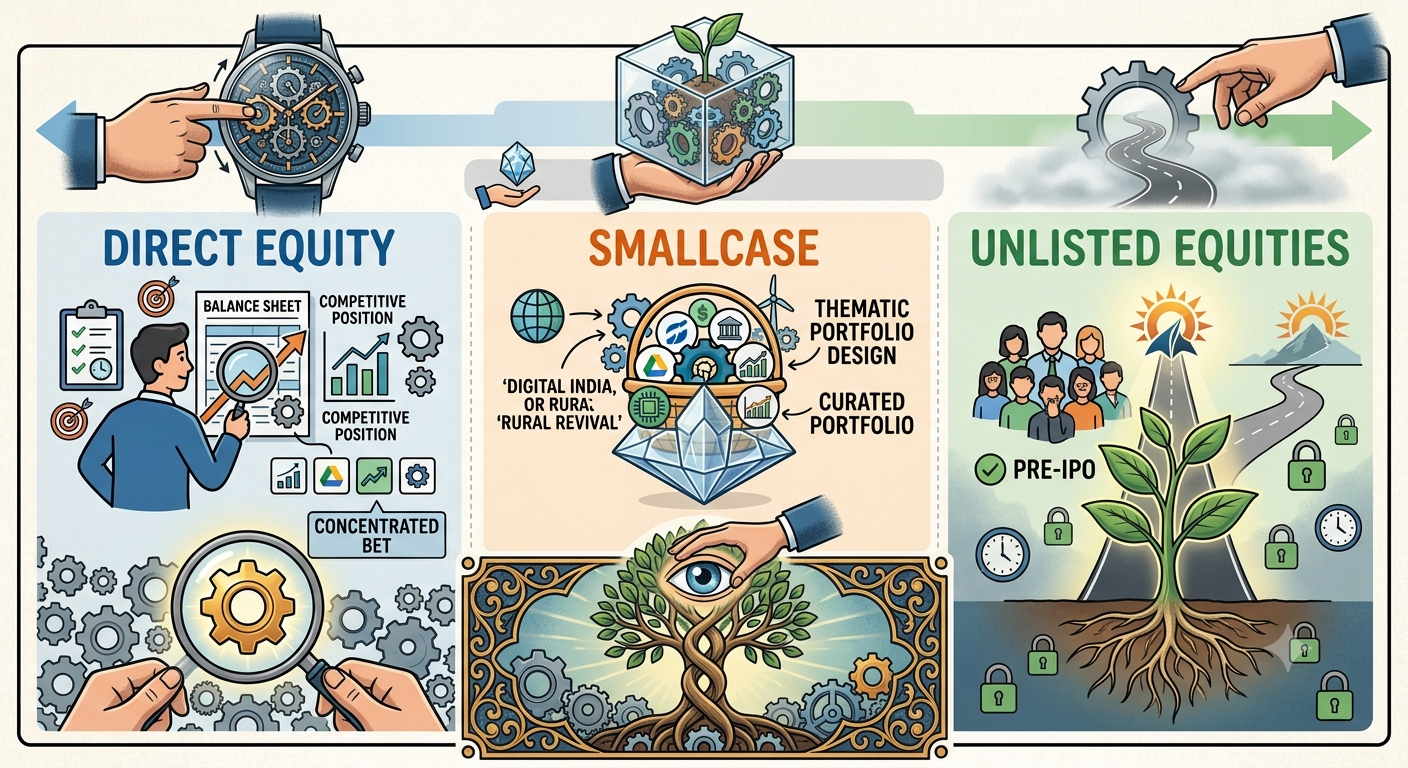
Direct stocks, theme-based baskets, and pre-IPO shares — three ways to own equity directly.
Owning equity directly — rather than through a pooled fund — isn't one single thing. It's a spectrum, running from picking individual stocks yourself, to buying a ready-made basket built around a theme, to getting in on a company before it's even listed. All three sit in your own demat account. All three trade the convenience of a fund manager for direct control — and the risk that comes with it.
Direct Equity Owning shares of individual companies directly means full control over exactly what you own, when you buy it, and when you sell it — with no fund manager standing between you and a bad quarter. It rewards investors who do the work: understanding a business, its balance sheet, its competitive position, not chasing a tip that sounded good over dinner. We help size these positions relative to the rest of the portfolio, so a concentrated bet stays a considered decision, not a regret waiting to happen.
Smallcase A smallcase is a curated basket of stocks or ETFs built around a specific theme or strategy, investable as a single unit. It sits between direct equity and mutual funds — the transparency and direct ownership of individual stocks, with the convenience of a professionally designed portfolio behind it. Ideal for investors with a view on a sector or theme who don't have the time to build and rebalance that exposure stock by stock — though like anything theme-based, it works best as one deliberate piece of a diversified portfolio, not the whole portfolio.
Unlisted Equities
These are shares of companies that haven't yet gone public, bought through private transactions rather than on an exchange — established businesses that simply haven't listed, or pre-IPO companies where a listing may be on the horizon. The appeal is getting in before the broader market can; the trade-off is a lack of daily pricing and an exit that isn't as simple as placing a sell order. This is a satellite allocation — a smaller, deliberate part of a portfolio for investors who can afford the capital being locked away for a while.
"Know what you own, and know why you own it." — Peter Lynch